SurveyMonkey
International growth experiments
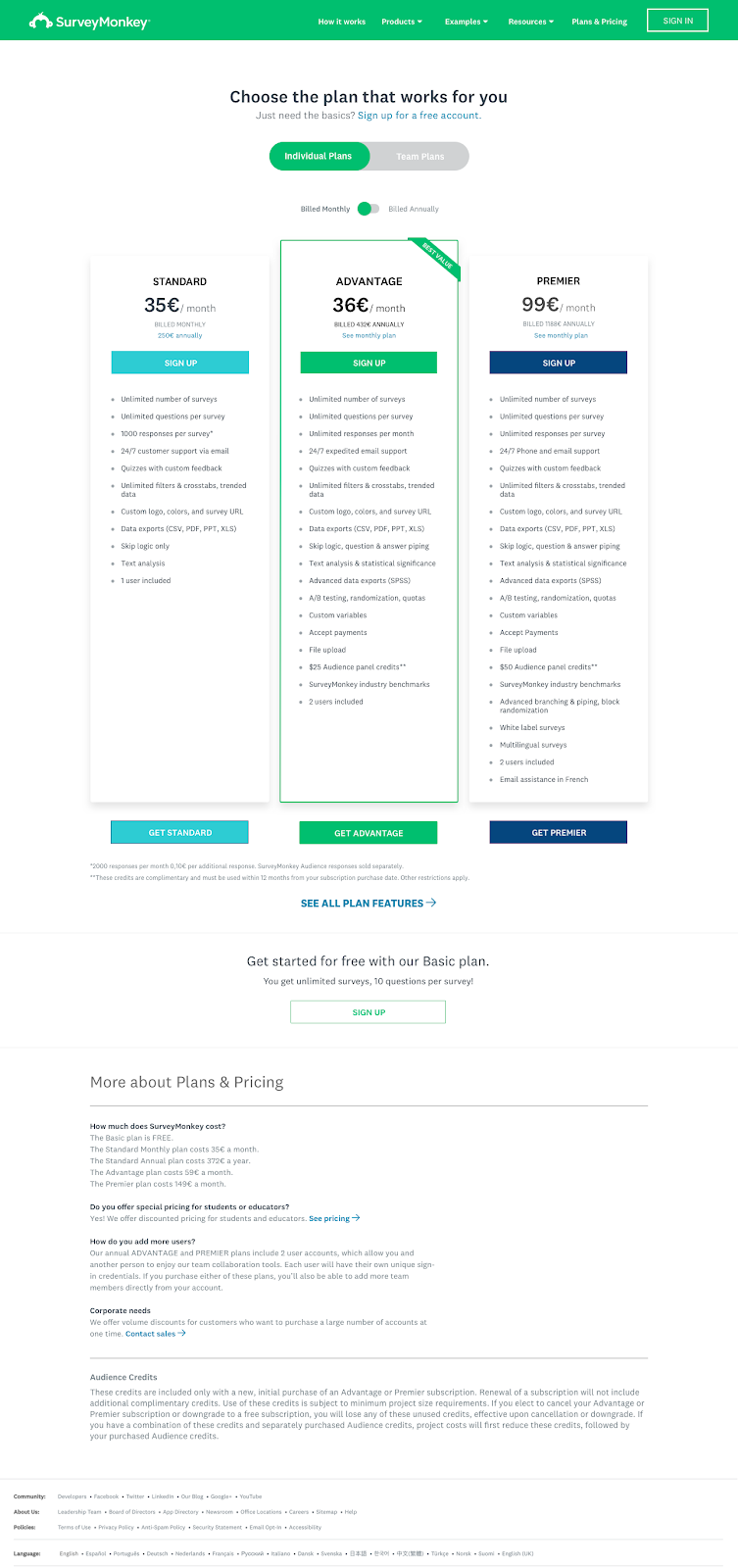
Pricing page and checkout experiments promoting new monthly packages for users in France, Italy, and Spain.
- Problem
- The International Growth team needed to promote new monthly packages through its pricing page and checkout for users in Italy, Spain, and France, and had never worked with a dedicated product designer.
- My role
- Lead product designer for the team while also supporting two others. Set up rituals and experiment planning with a largely new team, including 10 days onsite in Dublin.
- Key decisions
- Designed variants polished enough to learn from in testing, but not so polished that they slowed the team.
- Phased tests to isolate variables, with the basic-to-paid rate as the success metric.
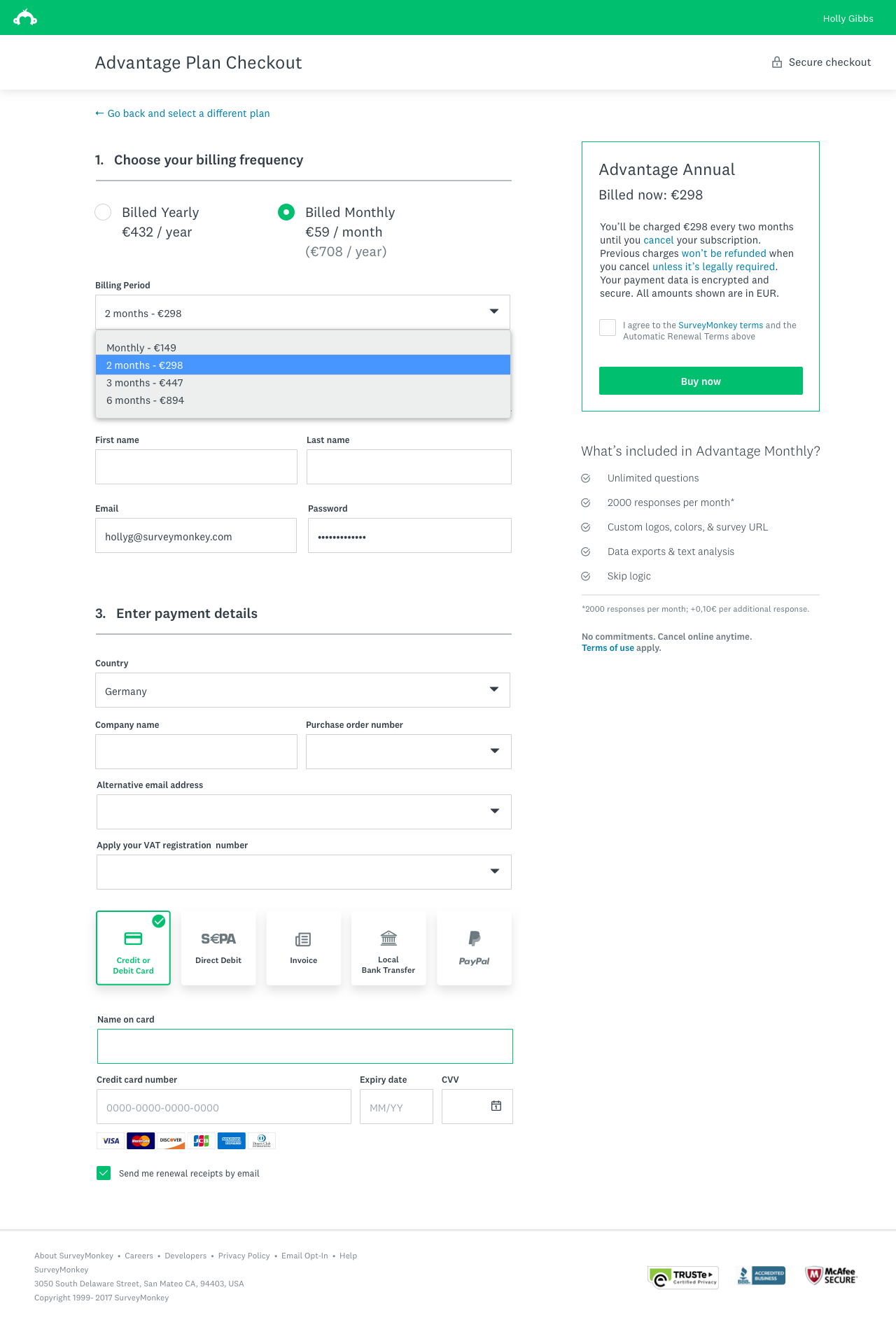
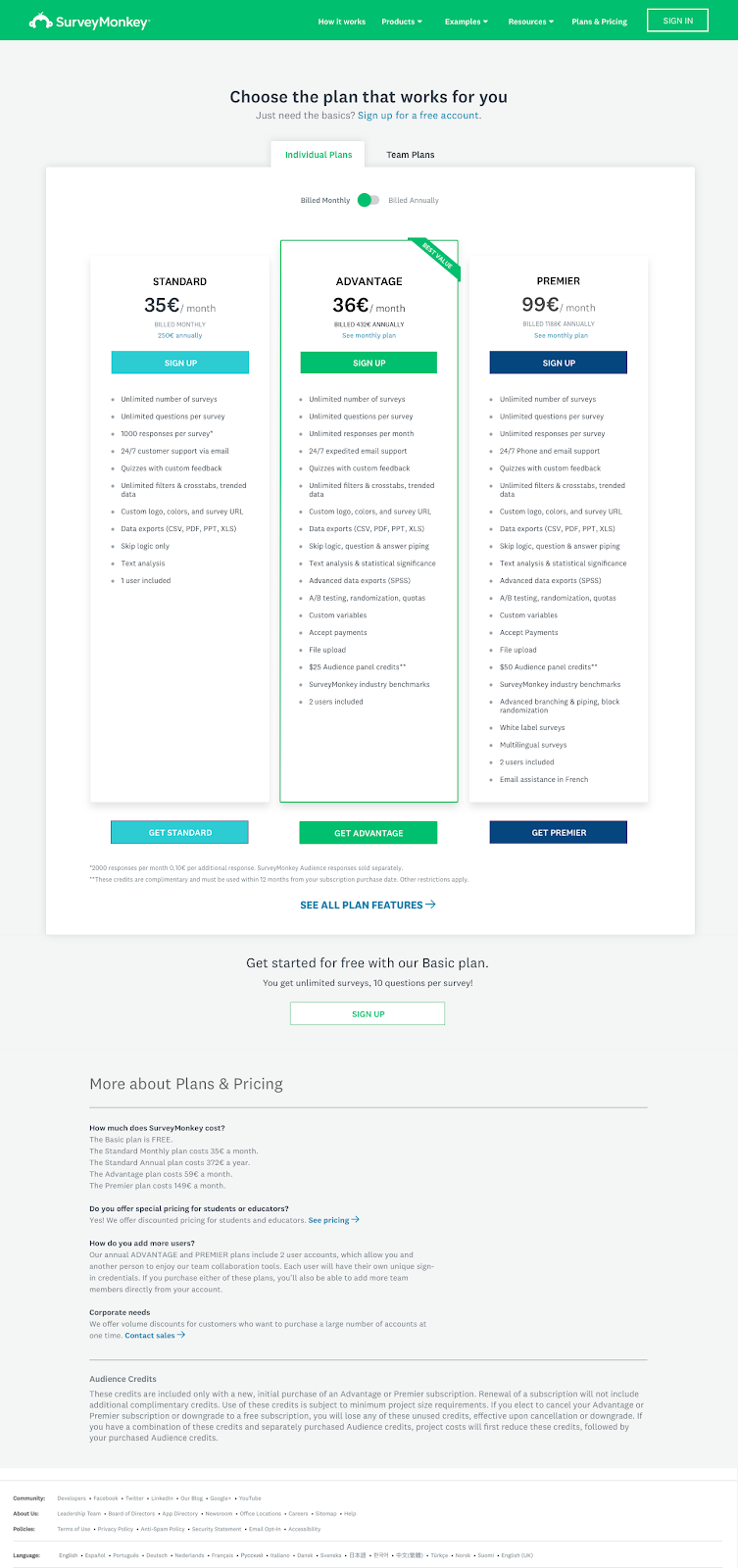
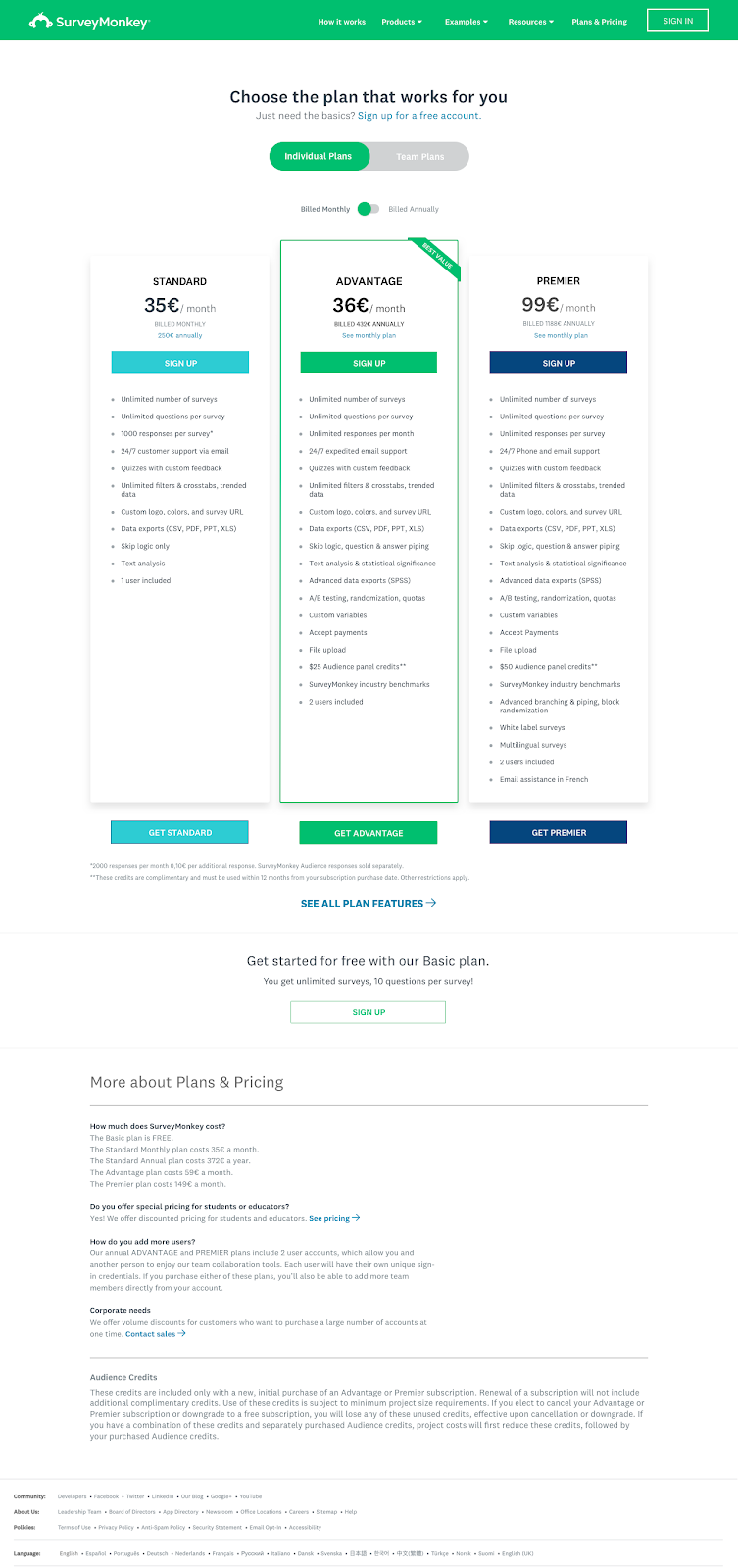
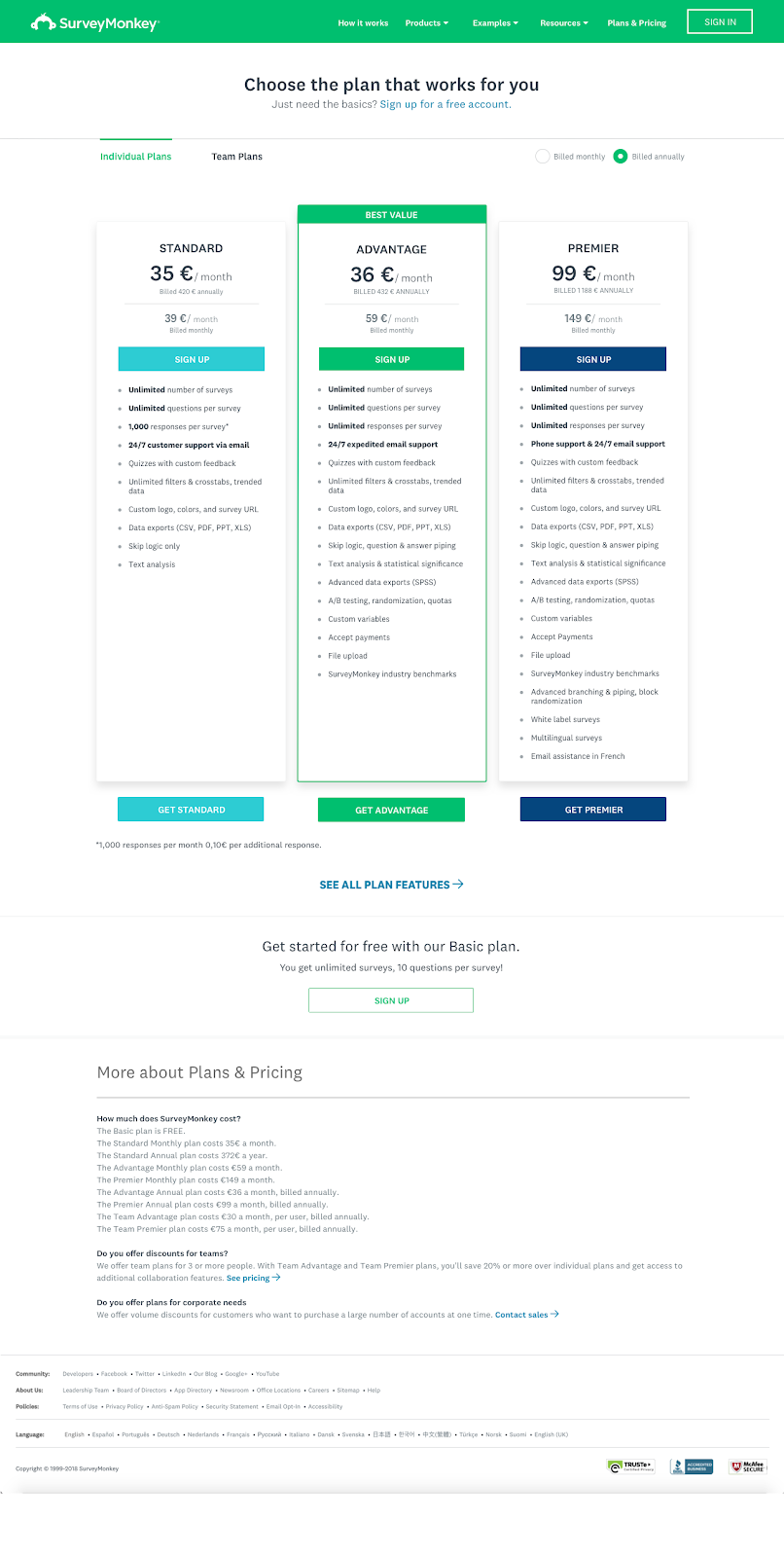
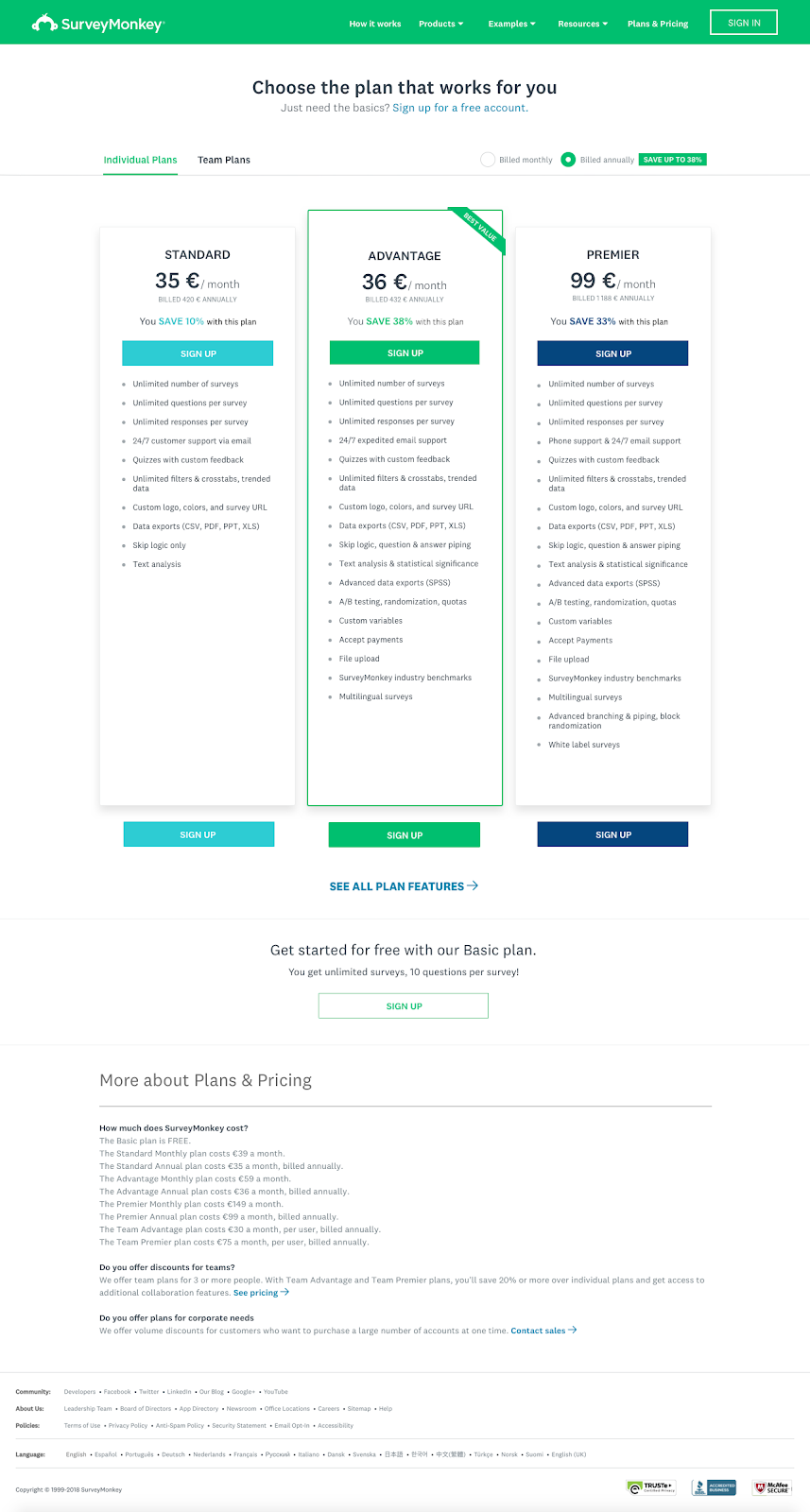
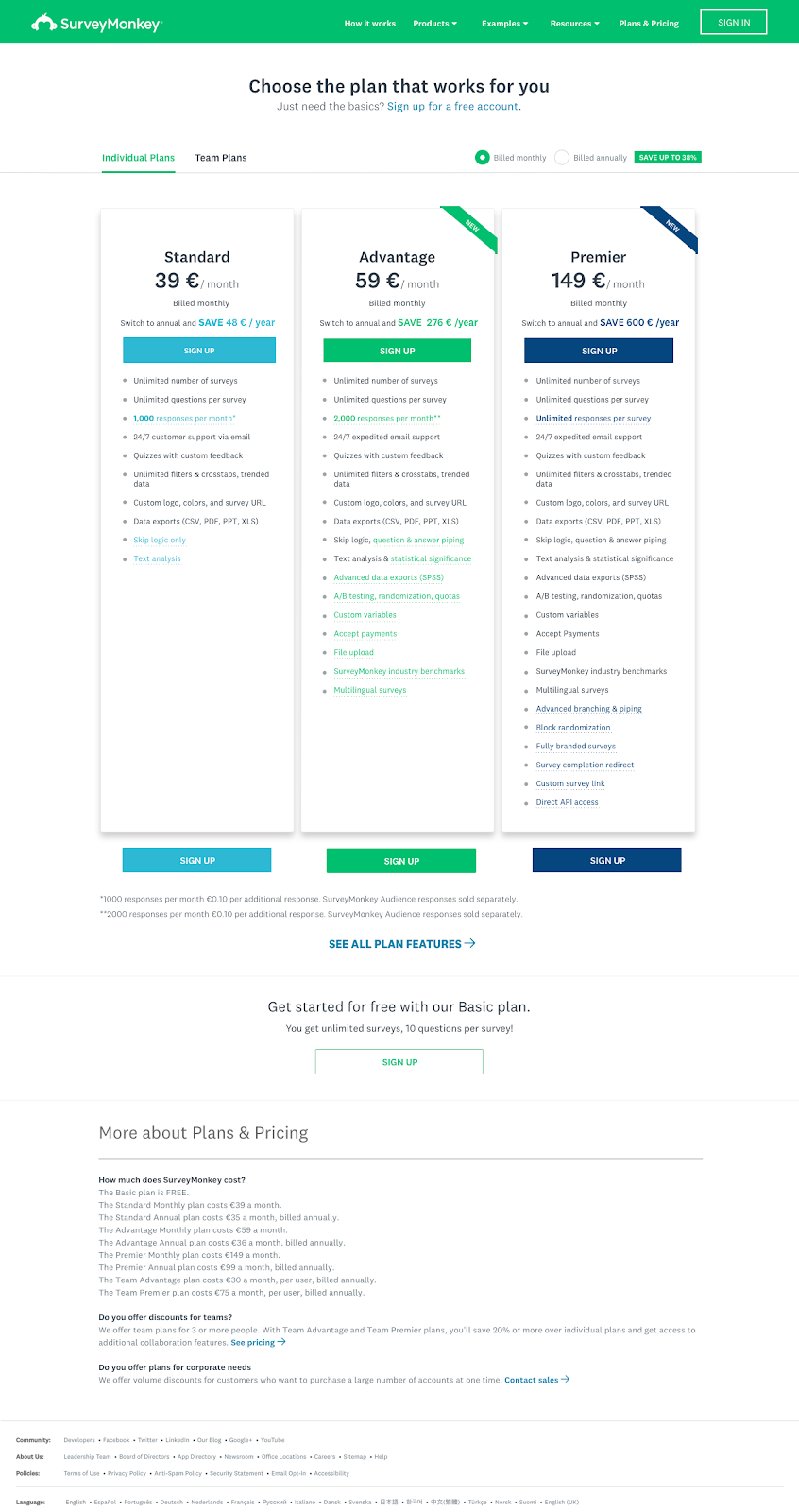
- Tested whether a toggle and a NEW label made monthly versus annual plans clear.
- Outcomes
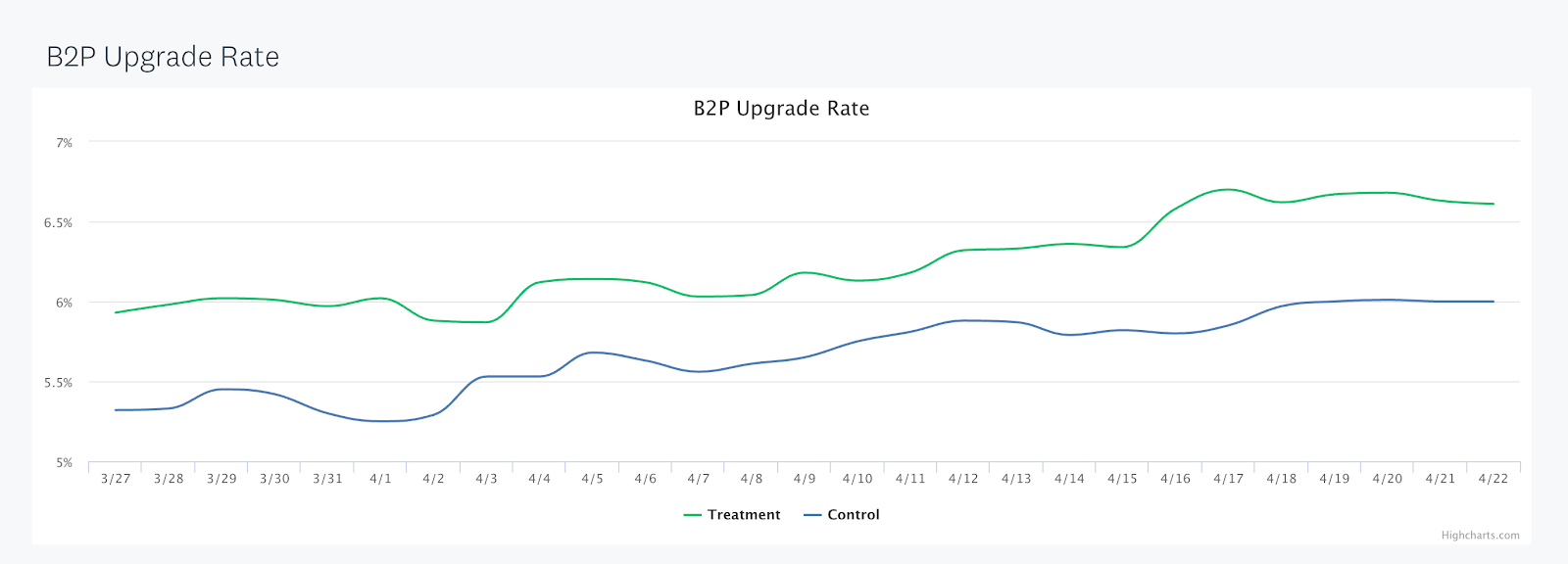
- The basic-to-paid upgrade rate was significantly higher in the treatment, and ARPU rose 9%. Some of the experiments were integrated into the product.
Context
Senior Product Designer · 2018–2019
Services: Design & team strategy · Research, testing & test-follow iteration · UI/UX design · Growth experimentation · Cross-functional relationship building and communication · Design systems collaboration
Status: All of these experiments have ended. Some were integrated into the product experience.
Typeface: National 2
Objective
The International Growth team wanted to run tests on their pricing page and checkout flow in order to promote new monthly packages and pricing on the platform.
The goal of these experiments specifically was to create a more targeted package and checkout experience for users in Italy, Spain, and France.
Overview
As our international efforts became more of a focus, the International Growth Team was tasked with hitting an 18% year-over-year growth target in 2019 with expected acceleration in 2020.
In addition to this ambitious goal, the International Growth team had never worked with a dedicated product designer, so the majority of the experiments they had been running were based on copy and engineering improvements.
My contributions
I was always supporting two other teams, so my time had to be spent efficiently when working with this team. The team was almost completely made up of members who were new to the company. The growth director, Senior PM, Engineering lead, content strategist and engineers had all joined the company within the last six months. Additionally, two of the engineers had never worked directly with a product designer before.
Team rituals & processes
Worked with leadership and teammates to develop rituals, cadence workflows, and strengthen communication best practices to help the team better integrate into the company's processes.
Design efficiency
Focused on designing experiences that were good enough to learn from in testing, but not too polished that it slowed down the team's progress.
Cross-functional partnerships
Collaborated and built relationships with the engineering, product management and design systems team partners in order to keep forward progress as efficient as possible.
Experiment planning
Planned experiments by helping to identify key performance metrics, phasing tests to isolate variables and learnings, and developing a thorough understanding of business goals and how to analyze test results.
Business rationale
There was significant customer demand for monthly plans on higher-tier packages in the International market, and we believed that by offering new monthly packages, it would generate incremental new paid seats, increase the basic-to-paid rate, and have a positive effect on AOV by shifting demand for Standard Monthly packages to Advantage or Premier Monthly packages.
The success metric we focused on was the basic-to-paid rate for both existing and new users.
Design strategy & user research
I worked with the team to create some variations on the current user experience for paid plan sign-ups. We needed to answer the following questions in our research:
- Do users understand the differences between monthly and annual plans?
- Is the toggle component the best way to navigate between the two categories of plans?
- Does the 'NEW' label highlight the new packages effectively?
- Do users feel they understand the annual saving percentages?
Onsite team training
I traveled to SurveyMonkey's Dublin office for 10 days to work onsite with the team and we ran two sprints (team kickoff, designs, user testing, iteration, development, experiment launch, learnings, repeat).

Experiment metrics
Audience
France, Italy, and Spain
Key performance metric
Conversion — specifically the basic-to-paid rate for existing and new users.
Hypothesis
New monthly packages will generate incremental paid seats, increase B2P rate, and shift demand from Standard Monthly toward Advantage or Premier Monthly — improving AOV.
Next steps
Finance to model results and launch new designs to mitigate the drop in annual package mix.
Experiment results
Our B2P (basic to paid user) upgrade rate was significantly higher in the treatment we tested. Additionally, ARPU (annual revenue per user) went up 9%.
We'd been getting up to four refund requests a month in this market. After launch that dropped to zero and stayed there for at least six months.
Research in the UK, Germany and France found the old pricing page confusing. In testing, the comparison table I designed made the plans easy to tell apart at a glance.
The next round of iterations would include:
- In-product messaging to upsell advantage monthly to advantage annual
- Highlighting features such as unlimited responses with advantage annual
- Include US test in FR, IT, ES for annual savings on checkout
- Add new currencies as we can test other lower B2P markets
- Revisit the features for monthly packages to shift mix
- Remove standard and rename advantage/premium to just display 2 packages
- Increase standard monthly price, test increments
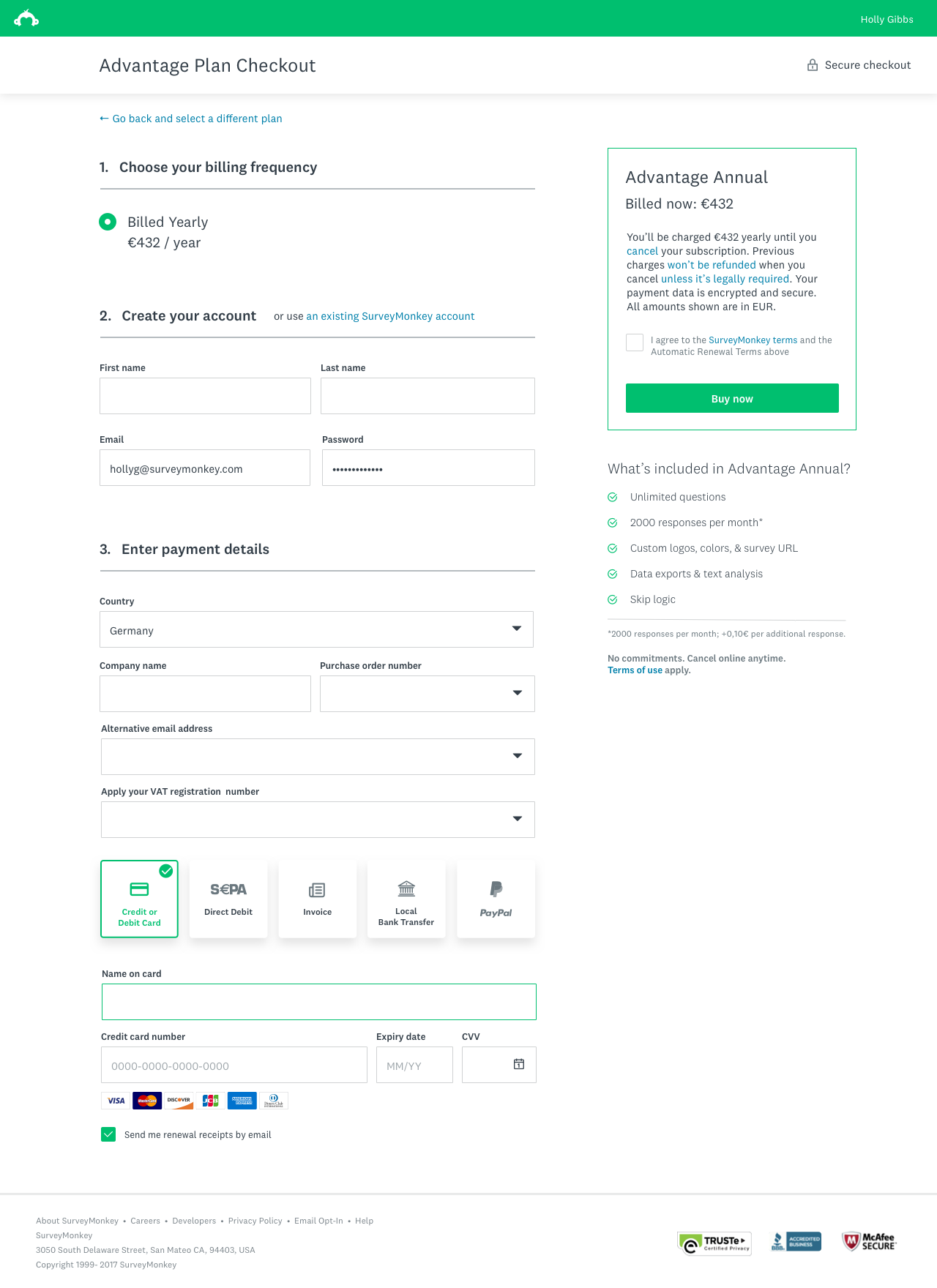
The next round moved past the pricing page into checkout. I reordered it so billing frequency came first, added the payment methods people in each market actually use, like SEPA direct debit and local bank transfer, and rewrote the order summary to say plainly when you'd be charged and what could be refunded.
Learnings
- Communication is invaluable when working with a team: talk through scenarios, discuss things easily and often, and work with a shared understanding of your goals
- Nothing beats working onsite with a team
- Clearly prioritize features for experiments to let engineers know what it will take to stop something that's good enough to learn from but not so polished that we're losing time and resources to experiments that aren't winning