Code for America
Code for Gainesville website
Context
UX/UI Designer · 2017
Services: UX/UI design · User & pattern research · IA · User flows · Copywriting
Typeface: Work Sans
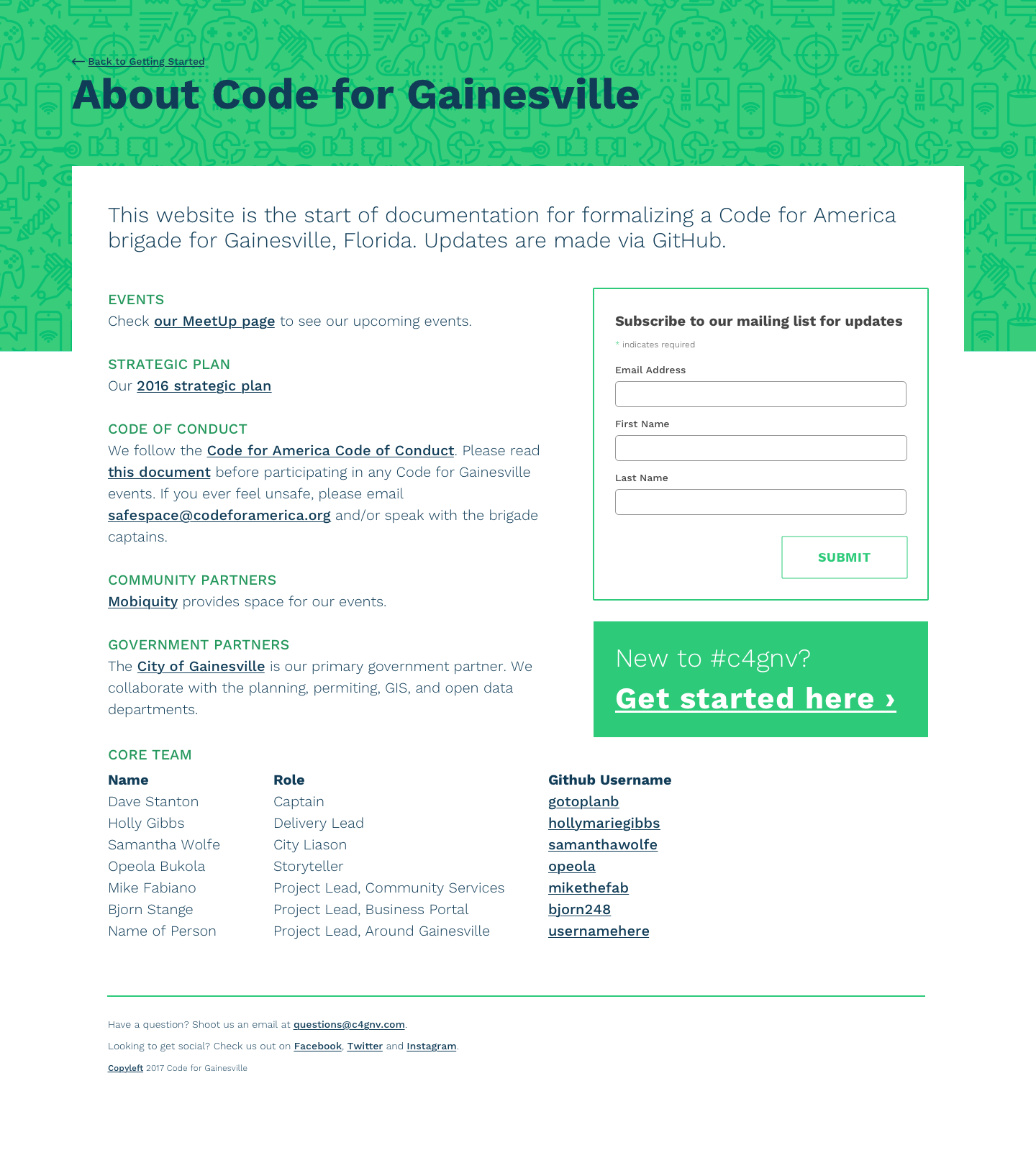
Code for Gainesville is a local brigade of Code for America, a nonprofit organization with a mission to make government work in the digital age. Members donate their time and expertise to help the City of Gainesville's government serve the local community better.
Problem
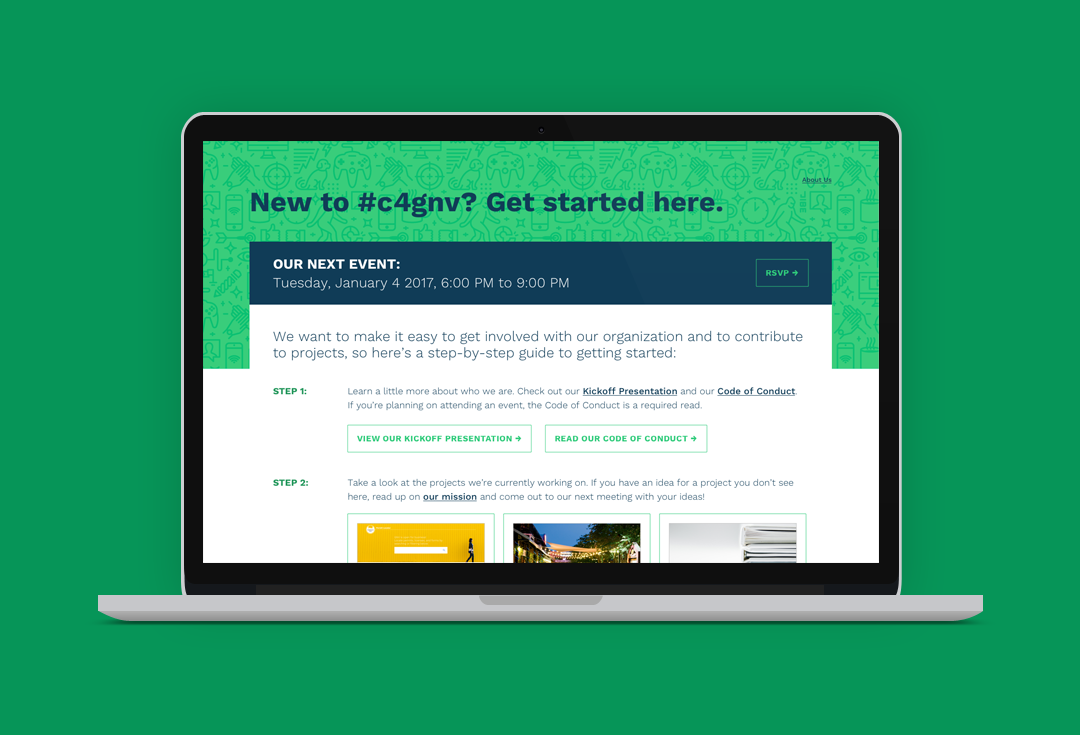
The Code for Gainesville brigade needed a site that would inform users of when events were taking place, but would also address the cost of user onboarding time administrators were facing each meeting. With only two 3-hour working sessions a month, losing an hour to setting attendees up so they could begin actively contributing to projects was too costly. Since some attendees attended meetups infrequently, we wanted to make their time as valuable as possible.
Process
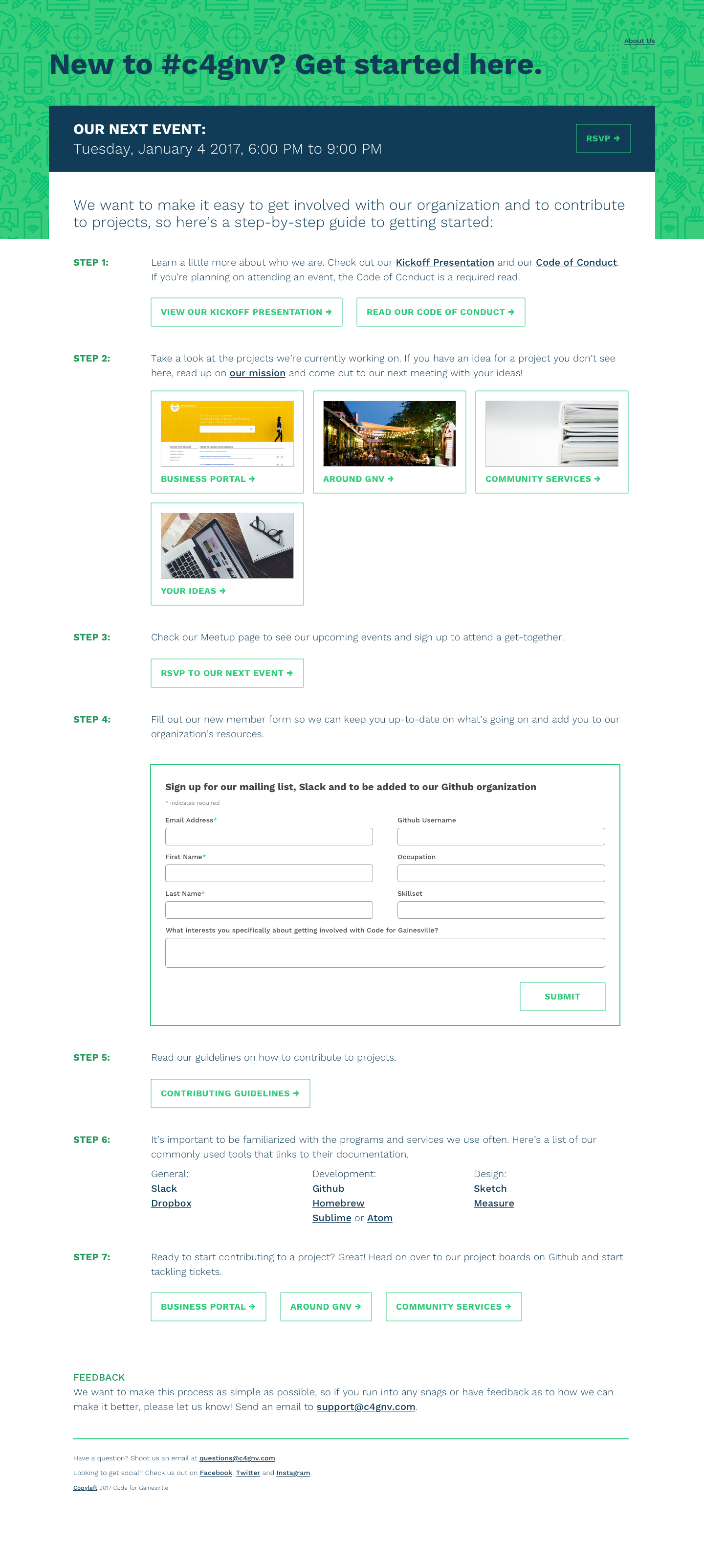
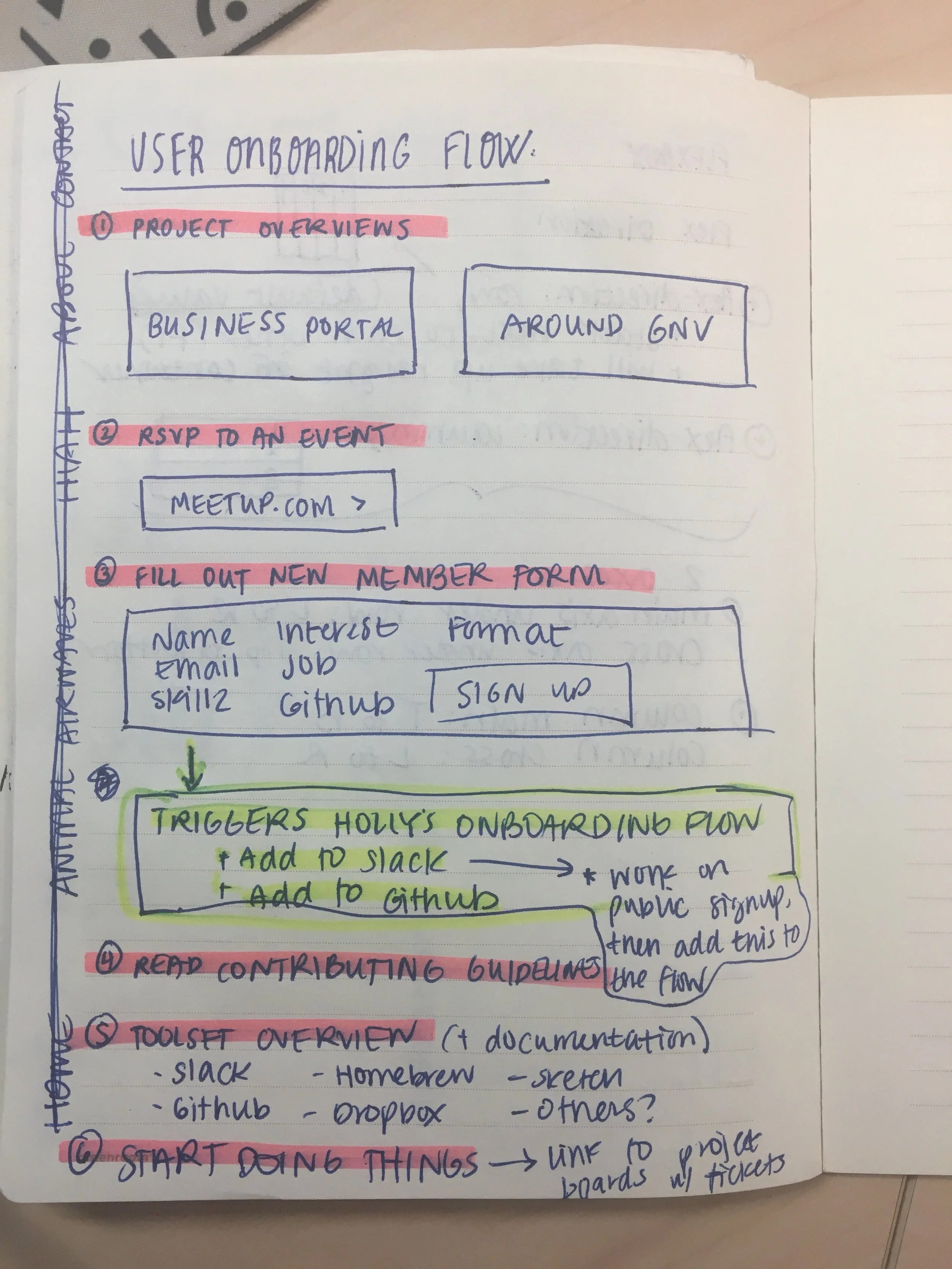
I started by designing the user onboarding flow, which allowed me to identify the specific actions we needed to facilitate with our site. A step-by-step flow emerged, and this highly influenced the layout and design of the website. We wanted the site to be as straightforward and simple to use as possible so potential attendees wouldn't be intimidated by a complicated onboarding process and so we could focus on active contributions during meetups.
Outcomes & impact
Previously, getting a new contributor up and running required them to show up to a meetup in person, where an administrator would manually walk them through account setup, tool access, and project orientation — consuming the better part of an hour of limited meeting time. The redesigned site automated the entire onboarding sequence: a new member could read through the step-by-step flow, sign up for Slack and GitHub, review contributing guidelines, and self-assign to a project — all before ever attending a meeting.
The result was a self-serve onboarding experience that got new contributors ready to actively participate in under an hour, independent of meeting schedules or administrator availability. This freed up meeting time for actual project work and lowered the barrier to entry for people who could only attend occasionally.